7 Common Truck Scale Buying Mistakes That Cost You A Fortune
Views: 0 Author: Site Editor Publish Time: 2026-05-20 Origin: Site
Introduction
Have you ever purchased industrial equipment just to regret it six months later? If you own a farm, logistics yard, or processing factory, a truck scale (or weighbridge) is one of your biggest fixed investments. It’s not a cheap handheld tool; it’s a heavy-duty asset meant to serve your business for decades. Yet here’s the harsh truth: 80% of first-time buyers waste thousands of dollars on avoidable mistakes.
After working in the weighing equipment industry for years, talking directly with factory engineers and frustrated end-users, I’ve witnessed the same costly errors repeat over and over. Buyers trust vague sales tactics, follow wrong intuition, and prioritize flashy specs over practical functionality. These poor choices lead to inflated purchase costs, inaccurate weight readings, constant breakdowns, and unwanted operational downtime.
In this honest, jargon-free guide, I break down the 7 most common truck scale buying mistakes that drain your profit. I’ll use simple analogies, real industry data, and plain conversational language to help you skip the traps and buy a scale that actually works for your business, not against it.
Mistake 1: Choosing an Over-Wide Scale for No Reason
1.1 The Misconception: The Wider, The Better
1.1.1 Why Do Buyers Obsess Over Wider Platforms?
Human psychology is a funny thing when it comes to industrial purchases. Most novice buyers automatically assume wider equals safer and more stable. They think a broader platform gives truck drivers extra room to park, reducing the risk of driving off the scale edges. Sounds logical, right? But this surface-level thought is nothing more than an expensive cognitive bias.
Many buyers blindly pick 3.2m or 3.4m wide scales without researching traffic rules or structural mechanics. They ignore standard industry sizing just to gain a few extra centimeters of empty space—and that tiny margin costs them a fortune in hidden fees.
1.2 Hidden Extra Costs of Over-Width Scales
1.2.1 Exorbitant Over-Width Transportation Fees
Do you know the legal width limit for standard cargo trucks? It’s exactly 3 meters. Any industrial cargo exceeding this width is classified as over-dimensional freight. Transporting a 3.2m or 3.4m scale requires special permits, dedicated oversized trailers, and restricted travel routes to avoid road width limitations.
These extra logistics fees are no small change. On average, over-width shipping increases your total budget by 15% to 25%. That’s pure wasted money for unnecessary width you will never actually use.
1.2.2 Compromised Structural Rigidity
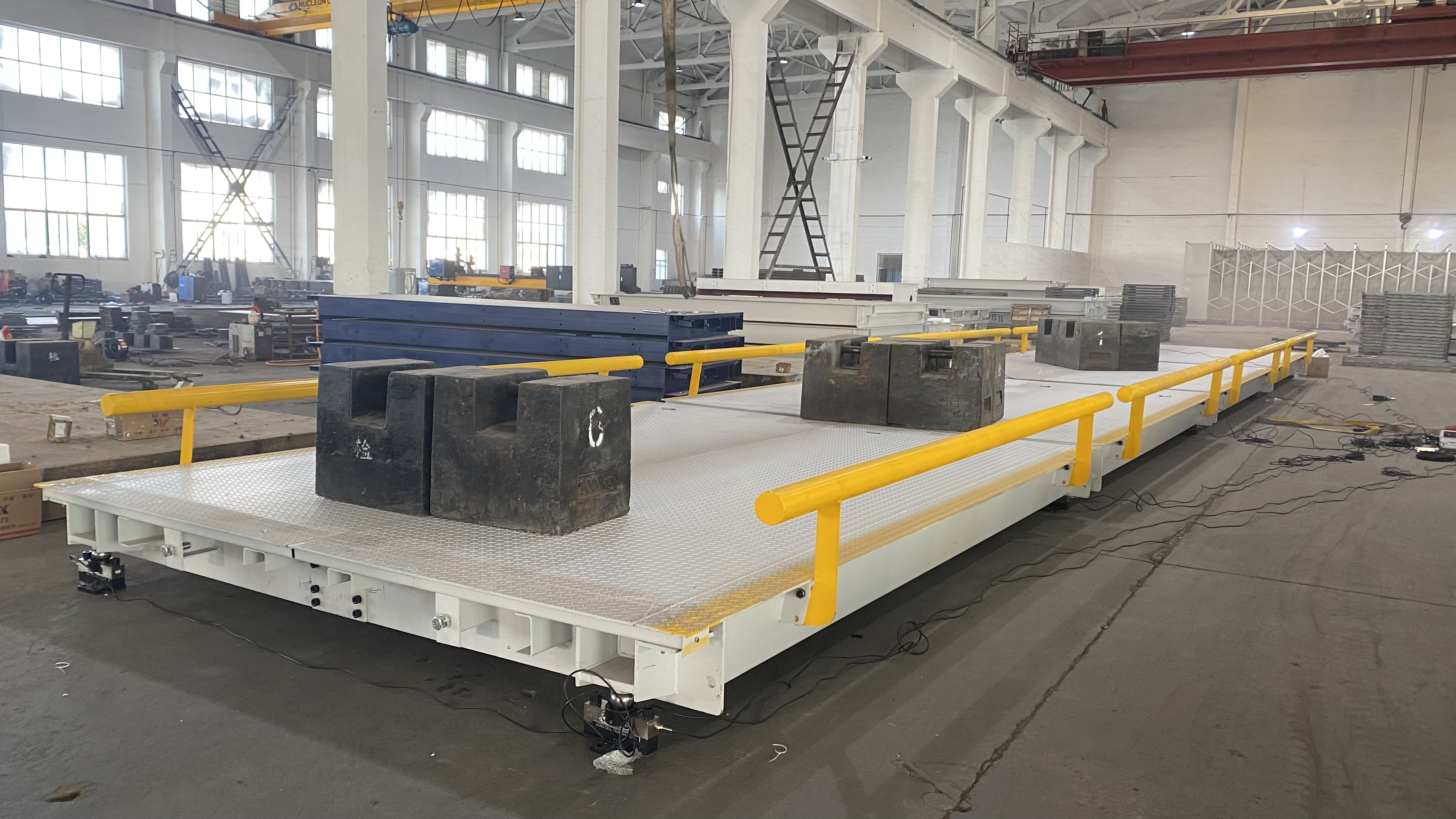
Here is a little-known engineering secret: extra steel does not always equal extra strength. The 3-meter width is the industry golden standard because it maintains perfect mechanical stress balance. When manufacturers add extra steel plates to widen the platform, the uniform pressure distribution breaks.
The uneven steel layout creates weak stress points on the scale body. Over months of repeated truck compression, these weak points slowly deform, reducing durability and shortening the scale’s service life. Why pay more for a weaker product?
How many times have you heard someone say, “Bigger is always better”? This outdated mindset ruins countless scale purchases. Most customers firmly believe a 150-ton scale outperforms a 60-ton model in every way. They treat maximum tonnage as a quality badge, completely ignoring basic physical weighing principles.
You might ask: what harm can a higher-tonnage scale do? The answer is simple: it kills your weighing precision.
2.2 The Non-Negotiable Industry Rule: Tonnage vs Accuracy
Every legal commercial truck scale falls under Class III weighing instrument standards. The universal rule is clear: the minimum division value equals roughly 1/3000 of the full load range. Let me give you easy-to-understand numbers:
30-ton scale = 10kg minimum detection unit
60-ton scale = 20kg minimum detection unit
150-ton scale = 50kg minimum detection unit
If you run a grain yard counting small profit margins, a 50kg accuracy gap will destroy your monthly revenue. Any supplier claiming ultra-high tonnage paired with extreme precision is lying straight to your face. These scammers target uninformed buyers who equate heavy load capacity with superior quality.
Mistake 3: Hiding Usage Frequency From Manufacturers
3.1 Steel Fatigue: Your Scale Also Gets Tired
Think of your truck scale like a human worker. If you work an employee eight hours a day, they stay healthy and productive. Force them to work 20 hours nonstop, and burnout is inevitable. Steel structures follow the exact same rule.
Every time a truck rolls onto the scale, the steel body bends slightly before rebounding to its original shape. This repeated compression and recovery process causes metal fatigue. If you rarely use the scale (3-5 trucks daily), you don’t need industrial-grade thick steel. But if you stay silent about your low usage frequency, manufacturers will protect themselves.
Legitimate factories always default to the highest heavy-duty standards for vague customer orders. You end up buying a scale built for 500 daily truck passes when you only need it for five. That’s thousands of extra dollars wasted on redundant steel materials.
Mistake 4: Falling for Long Warranty Gimmicks
4.1 Why Multi-Year Warranties Are Empty Promises
Which deal sounds better: a 1-year official warranty or a 5-year lifetime guarantee? On the surface, the 5-year warranty looks like an unbeatable bonus. In reality, it is the cheapest marketing trick in the weighing industry.
Most sellers boasting multi-year warranties are middlemen with no physical factory, no fixed assets, and no long-term business plans. They sell scales for quick cash and vanish within two years once profits drop. When your scale short-circuits or deforms, who will repair it? Nobody.
Trust me—our factory owns hundreds of scales that have run smoothly for over a decade. Even so, we only promise a standard 1-year warranty. Why? Because we value credibility over empty advertising. A sincere one-year warranty from a real factory beats a fake lifetime guarantee from a disappearing shell company every single time.
Mistake 5: Picking the Wrong Steel Beam Structure
5.1 U-Beam vs Channel Steel: Simple Bridge Analogy
Let’s simplify engineering with a daily life analogy. The channel steel structure is an old flat stone bridge. It relies purely on stacked thick stone to bear weight, wasting massive raw materials with rigid, inefficient force distribution.
The U-beam structure, by contrast, is a modern arched stone bridge. It uses scientific mechanical physics to disperse pressure evenly across the entire scale body. It needs less steel, costs less money, and maintains better long-term stability.
Only choose channel steel if your indoor factory has strict vertical height limits. For every outdoor industrial scenario, U-beam is the undisputed, cost-effective winner. Never let salespeople trick you into overpaying for outdated channel steel structures.
Mistake 6: Installing The Scale Underground
6.1 Silent Damages of Pit-Mounted Scales
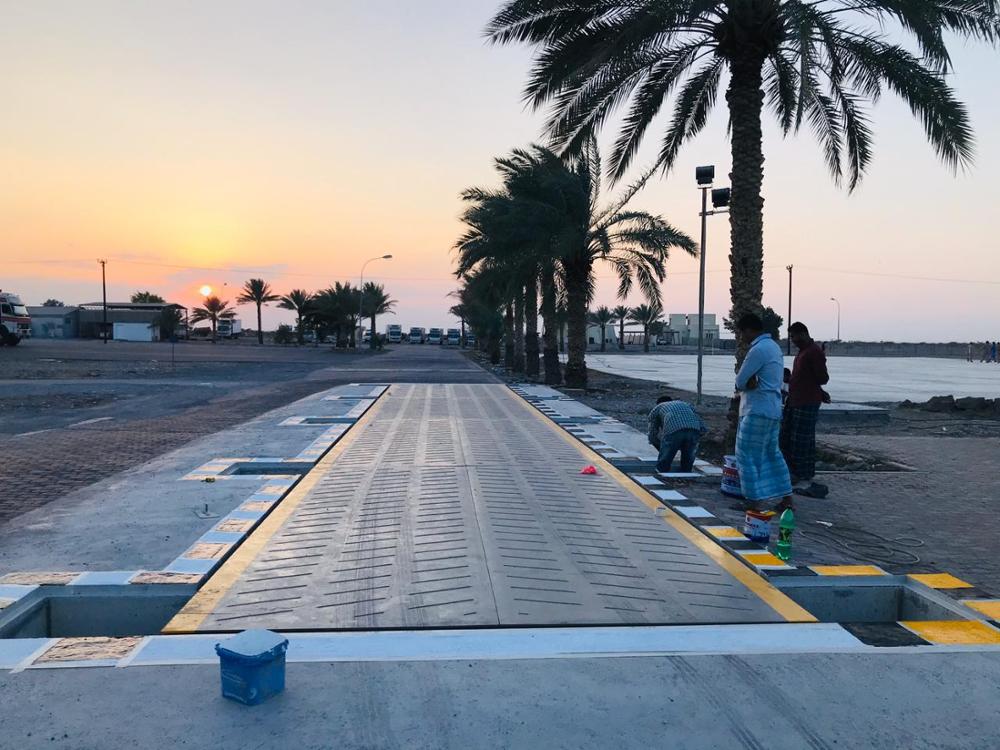
Many business owners love underground pit scales for their flat, tidy appearance. They save yard space and eliminate ugly ramps—but aesthetics come at a brutal cost. Closed underground foundation pits have terrible drainage systems. After heavy rain, rainwater accumulates and submerges high-precision sensors.
Water corrosion ruins circuit boards and internal electronic components permanently. In extreme rainy seasons, I have even seen entire underground scales float out of their pits due to water buoyancy. Worse still, sideways truck traffic generates lateral pressure that shifts fixed sensors, causing constant weighing deviations.
If your land conditions allow it, always pick an above-ground installation with simple ramps. It guarantees natural drainage, easy manual maintenance, and a much longer service lifespan.
Mistake 7: Partnering With Unqualified Suppliers
Cheap prices always attract inexperienced buyers. Unqualified small suppliers use exaggerated parameters, fake long warranties, and sweet words to cater to your wrong buying habits. They don’t have professional testing equipment, standardized workshops, or local after-sales teams.
Physical manufacturing factories offer stable technical support, timely part replacement, and lifelong debugging services. Never chase one-time low quotations. A slightly higher upfront price from a reliable manufacturer saves you tens of thousands in post-purchase maintenance and replacement fees.
Conclusion: 6 Golden Rules For Smart Scale Buying
After breaking down these seven expensive mistakes, I’ve compiled six actionable golden rules to simplify your purchase journey. Memorize these rules before contacting any supplier:
Stick to the 3-meter standard width for 99% of industrial scenarios
Choose the minimum qualified tonnage to preserve weighing accuracy
Be honest about daily truck frequency to avoid over-engineering
Accept the 1-year warranty as the only trustworthy guarantee
Prioritize U-beam structures for all outdoor installations
Select above-ground installation to prevent water damage
A truck scale is a permanent business asset, not a disposable gadget. Every irrational buying decision creates invisible long-term costs. Abandon misleading industry myths, ignore flashy empty gimmicks, and prioritize practicality over unnecessary upgrades. If you follow these simple principles, you will buy a durable, cost-effective scale that boosts your profit instead of draining your budget.
Hener weighing is a leader in the design and development of technology for the weighing industry. Our company has been manufacturing electronic weighing systems for more than 20 years.
 English
 العربية
 Français
 Русский
 Español
 Português
 Deutsch
 italiano
 Nederlands
 Tiếng Việt
 ไทย
ไทย Polski
 Türkçe
 ភាសាខ្មែរ
 Bahasa Melayu
 Filipino
 Bahasa Indonesia
 Română
 Čeština
 Монгол
 қазақ
қазақ Српски
 हिन्दी
 Slovenčina
 Slovenščina
 Norsk
Norsk Svenska
 Ελληνικά
 Suomi
Suomi Հայերեն
 Latine
 Dansk
Dansk Shqip
Shqip Hrvatski
 Afrikaans
 Gaeilge
 Eesti keel
 Oʻzbekcha
 latviešu
 Azərbaycan dili
 Беларуская мова
 Български
 ქართული
 guarani
 Кыргызча
 Lietuvių
 Македонски
 Malti
Malti Soomaali
 Тоҷикӣ
 Türkmençe