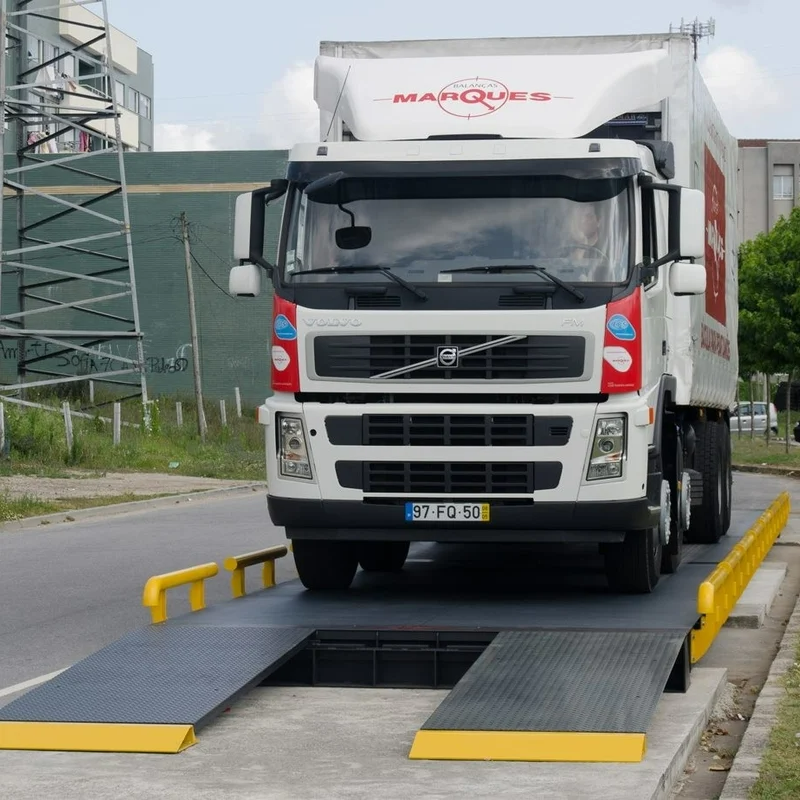
The Ultimate Truck Scale (Weighbridge) Buying Guide
Views: 0 Author: Site Editor Publish Time: 2026-05-19 Origin: Site
Introduction
Buying a truck scale, also known as a weighbridge, is never a small investment for farms, logistics companies, and material processing factories. A high-quality truck scale can serve you steadily for more than a decade, while a wrong purchase decision will bring endless troubles: wasted money, inaccurate weighing data, frequent breakdowns, and even sudden downtime that delays your entire business schedule.
After years of communicating with scale manufacturers and countless buyers, I have found one interesting fact: most customers make truck scale purchases based on intuition rather than professional knowledge. Many people firmly believe that "the wider, the better", "the higher the tonnage, the higher the quality", and "the longer the warranty period, the more reliable the product". Unfortunately, these common misconceptions are exactly the traps that make you overspend and get an inferior product.
In this detailed buying guide, I will break down all the core knowledge of selecting a truck scale in plain, easy-to-understand language. No complicated industrial jargon, no exaggerated marketing gimmicks. I will show you every key factor you need to consider, from size selection and tonnage matching to structural types and installation methods, helping you pick the most cost-effective truck scale without falling into business traps.
1. Pick The Right Scale Length & Width: Bigger Is Not Always Better
Standard Size Classification & Usage Scenarios
The first step to buying a suitable truck scale is to confirm the correct size. In the industrial weighing industry, truck scales have four standard widths: 2.5m, 3m, 3.2m, and 3.4m. The length ranges flexibly from 5 meters to 24 meters, and customized longer sizes are also available for special heavy-duty transportation scenarios.
Let’s start with the smallest width: the 2.5-meter scale. This size only has two conventional specifications: 2.5m*5m and 2.5m*6m. It is compact, low-cost, and highly targeted. It is almost exclusively used for grain collection stations. Small grain transport trucks are lightweight and narrow, so this miniature scale can fully meet the daily weighing needs of grain purchasing. There is no need to spend extra money on a larger scale for such simple scenarios.
Among the remaining three widths, the 3-meter width is the absolute mainstream choice in the market. It perfectly fits 99% of daily transport vehicles, including ordinary cargo trucks, medium-duty material transport vehicles, and engineering trucks. Whether it is for factory material counting or logistics weight checking, a 3-meter-wide scale is completely competent.
The Hidden Cost of Over-Width Scales
As for the 3.2m and 3.4m ultra-wide scales, I strongly advise most buyers to stay away. Ordinary transport trucks have a standard width of 3 meters, which means these two ultra-wide scales are classified as over-width cargo during transportation. Over-width transportation requires special approval, dedicated transport vehicles, and complex traffic procedures. The extra freight and handling fees will greatly increase your purchase cost.
Here is a crucial reminder for every buyer: many customers assume that a wider scale is more comfortable and stable to use. In fact, excessive width brings no practical benefits at all. Beyond the reasonable width standard, the extra steel materials only raise manufacturing costs, and the over-wide structure will even reduce the overall structural strength of the scale. Stick to the 3-meter width for general use—it is the most balanced and cost-efficient option.
2. Choose Appropriate Maximum Tonnage: Never Blindly Pursue Higher Capacity
The Core Rule: Tonnage vs. Accuracy
The maximum weighing capacity of a truck scale is professionally called the full scale range. This is another area where most beginners make serious mistakes. There is a universal misunderstanding among buyers: the larger the tonnage, the better the scale. However, the hidden trade-off is simple and cruel: the higher the tonnage, the lower the weighing accuracy.
Let me give you intuitive and clear examples to help you understand the accuracy rule. A 30-ton truck scale has a minimum division value of 10kg, which means the smallest detectable weight change is 10 kilograms. When the tonnage rises to 60 tons, the minimum division value increases to 20kg. For a 150-ton heavy-duty scale, the minimum division value reaches 50kg.
All regular truck scales belong to Class III weighing instruments, which comply with strict industrial standards. The minimum division value is generally 1/3000 of the full scale range, and it must be less than one ten-thousandth of the total capacity. This fixed standard determines that high accuracy and ultra-high tonnage cannot coexist.
Please keep this money-saving principle in mind: do not pursue unnecessary high tonnage. If you only need to weigh 40 tons of materials daily, a 50-ton scale is enough. An excessively high tonnage scale will sacrifice accuracy and raise the purchase price. Moreover, if a merchant promises you both ultra-high tonnage and extreme precision, stay away without hesitation. This kind of false promise only comes from unreliable shell companies or scammers who make money by misleading buyers.
3. Estimate Daily Usage Frequency: Tell The Manufacturer Your Real Demand
Fatigue Resistance: Scales Also Get “Tired”
Confirming the tonnage is not enough for manufacturers to customize the most suitable scale for you. Few people know that every truck scale has a fatigue resistance limit. When a truck drives onto the scale, the scale body will bend slightly under pressure and then rebound to its original state. This repeated bending and recovery process is a continuous test of the steel structure.
To make it easier to understand, we can compare the scale to a human being. A person can keep efficient working condition for 8 hours a day without physical discomfort. But if you force someone to work 20 hours nonstop every day, the body will eventually collapse from overwork. Similarly, if a scale bears frequent rolling and heavy pressure all day long, inferior structures will deform and break in a short time.
In actual communication, many customers are resistant when manufacturers ask about specific usage scenarios. Some even reply rudely: "You don’t need to know what I weigh; I just need a 100-ton scale." This seemingly tough attitude will only make you pay more hidden costs.
Without clear usage data, formal manufacturers will adopt the highest industrial standard for production to ensure product qualification. For example, if you only need to weigh 3 to 5 trucks per day, the manufacturer will still customize a heavy-duty scale that can bear 300 to 500 vehicles daily. Thickened steel, reinforced welding, and upgraded accessories will all increase the quotation. Honest demand communication is the simplest way to cut unnecessary procurement costs.
4. Rational View of Warranty Period: Reject Empty Gimmicks
Why 1-Year Warranty Is The Industry Standard
When comparing different suppliers, the warranty period always becomes the core selling point of many merchants. Regular and reliable manufacturers uniformly provide a one-year official warranty, which is the most reasonable and industry-standard warranty term.
Many buyers have encountered such attractive promises: "We provide a 5-year long warranty!" On the surface, it sounds like a more reliable after-sales guarantee, but in fact, this is an extremely irresponsible marketing trick. I have been in this industry for many years, and our company has a large number of truck scales that have been used steadily for more than ten years. Even so, we never promise an exaggerated long warranty.
The reason is straightforward: many merchants who claim 5-year or even lifetime warranties are shell companies with no independent factory and fixed assets. They make profits by reselling equipment. Once the weighing equipment has problems after two or three years, the merchant may have switched to other industries. By then, your long-term warranty promise will turn into an empty piece of paper, and no one will provide after-sales maintenance services for you.
Never believe illusory super-long warranty commitments. Choosing a large-scale manufacturer with physical factories, complete qualifications, and stable operating conditions is the most reliable way to protect your rights. A down-to-earth one-year warranty is far more valuable than an exaggerated lifetime guarantee.
5. U-Beam vs Channel Steel: Pick The Better Structure
Simple Bridge Analogy To Distinguish Structures
There are two mainstream steel structures for truck scales on the market: channel steel and U-beam. I will use the most vivid analogy to help you distinguish their differences. The channel steel structure is like an old-fashioned flat stone bridge, while the U-beam structure is like an arched stone bridge.
The flat stone bridge relies entirely on thick stone stacking to bear weight. Similarly, the channel steel scale requires a large amount of steel materials to ensure structural strength. Its production process is simple, but the material consumption is high, leading to a higher selling price. In addition, its bearing capacity depends on material thickness rather than mechanical structure, so the stress distribution is uneven.
In contrast, the U-beam structure learns from the mechanical principle of arched bridges. It has a more scientific force-bearing design, which can disperse pressure evenly on the scale body. This structure saves raw materials, reduces production costs, and achieves a more stable bearing effect at a lower price.
The selection principle is extremely clear: U-beam is the first choice for almost all scenarios. Only when the scale needs to be installed indoors with strict height restrictions can you consider the channel steel scale due to its low overall height. In all outdoor conventional usage environments, blindly choosing U-beam will never go wrong.
6. Installation Method: Above Ground or Underground?
Unambiguous Installation Recommendation
The last key step is to confirm the installation method. I have a clear and unambiguous suggestion for all buyers: choose the above-ground installation if conditions permit.
Many customers choose underground embedded installation for aesthetic and space-saving purposes. However, this method hides many potential risks. The underground foundation has poor drainage performance. Once heavy rain comes, accumulated water will soak the precision sensors and internal electronic components of the scale, causing permanent corrosion and damage. There are even many cases where the whole scale floats up due to rainwater accumulation.
Besides, vehicles passing sideways on the underground scale will generate lateral pressure. This force will displace the high-precision sensors, resulting in inaccurate weighing data. In severe cases, the internal connection lines will break, directly scrapping the expensive accessories.
Above-ground installation avoids all these troubles. It has smooth water drainage, dry internal environment, convenient daily inspection and maintenance, and effectively prolongs the service life of the truck scale. Never sacrifice long-term usability for temporary aesthetics.
Final Summary
Six Golden Rules For Scale Purchasing
Buying a truck scale is not a complicated task, but you must abandon wrong inherent prejudices. To sum up, choose a 3-meter standard width for daily use, pick the minimum qualified tonnage to ensure accuracy, truthfully inform the manufacturer of usage frequency to cut costs, recognize that a one-year warranty is the most reliable guarantee, prioritize U-beam structures, and choose above-ground installation. These six simple principles can help you avoid 99% of industry traps.
A suitable truck scale is a long-term asset for your business. Do not be misled by fancy marketing slogans. Make rational decisions based on actual usage needs, and you will definitely get a durable, cost-effective, and high-performance weighing device.
Hener weighing is a leader in the design and development of technology for the weighing industry. Our company has been manufacturing electronic weighing systems for more than 20 years.
 English
 العربية
 Français
 Русский
 Español
 Português
 Deutsch
 italiano
 Nederlands
 Tiếng Việt
 ไทย
ไทย Polski
 Türkçe
 ភាសាខ្មែរ
 Bahasa Melayu
 Filipino
 Bahasa Indonesia
 Română
 Čeština
 Монгол
 қазақ
қазақ Српски
 हिन्दी
 Slovenčina
 Slovenščina
 Norsk
Norsk Svenska
 Ελληνικά
 Suomi
Suomi Հայերեն
 Latine
 Dansk
Dansk Shqip
Shqip Hrvatski
 Afrikaans
 Gaeilge
 Eesti keel
 Oʻzbekcha
 latviešu
 Azərbaycan dili
 Беларуская мова
 Български
 ქართული
 guarani
 Кыргызча
 Lietuvių
 Македонски
 Malti
Malti Soomaali
 Тоҷикӣ
 Türkmençe