- All
- Product Name
- Product Keyword
- Product Model
- Product Summary
- Product Description
- Multi Field Search

Views: 0 Author: Site Editor Publish Time: 2025-12-08 Origin: Site
Let's be brutally honest for a second. If you're reading this, you've probably already experienced that gut-sinking moment. The moment you place a known weight on your floor scale, and the numbers dance around like they're at a rave. Or when the same pallet gives you three different weights depending on which corner you push it towards. You've learned the hard way that the answer to “Do floor scales work on an uneven floor?” is a frustrating, “It depends.”
But what if I told you the problem isn't just the floor? Often, it's the type of scale. As someone who lives and breathes industrial weighing, I've seen this story play out countless times. Today, I'm not just going to explain why uneven floors cause havoc—we'll get into that—but I'm going to introduce you to the design philosophy that turns this problem on its head: the double-deck floor scale. This isn't just a product; it's a strategic solution for the real, imperfect world.
Before we get to the hero of our story, we need to fully understand the villain. An uneven floor isn't just an aesthetic issue; it's a fundamental physics problem for any weighing device.
Think of weight as a force arrow pointing straight down to the center of the Earth—a pure vertical vector. A scale's job is to measure the length of that arrow. Now, tilt the scale on a slope. Suddenly, that force arrow splits. Part of it still pushes down (the part we want), but another part pushes sideways against the scale's structure. This lateral force is pure noise. It creates friction, binds moving parts, and stresses the sensors in ways they weren't designed for. It's like trying to measure your pure singing voice while someone is blasting static from a radio right next to you.
Your equipment will tell you when the floor is winning. Watch for these red flags:
The Inconsistent Storyteller: You weigh an item twice and get two different tales.
The Wanderer: The display never settles, slowly drifting up or down.
The Positional Snob: The weight changes if the load is on the left, right, front, or back.
The Grudge Holder: It never truly returns to zero, holding onto the memory of the last load.
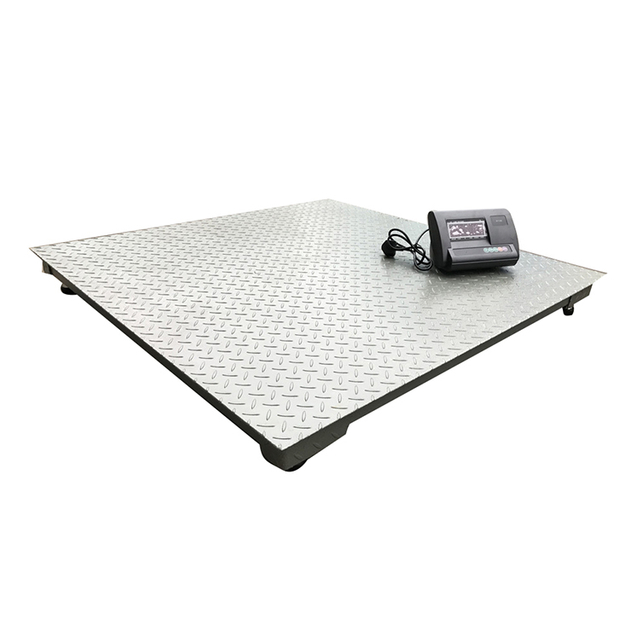
Most industrial scales come with adjustable feet. You level it with a spirit level, calibrate, and hope for the best. For minor imperfections, this works. But what about the real world? The world of cracked concrete, gradual drainage slopes in warehouses, and settled factory floors?
A traditional single-deck scale is like a solid, one-piece table. The weighing platform and the base frame are rigidly connected. When you level it on an uneven surface, you're essentially twisting the entire structure to make the top platform horizontal. This puts the entire frame and the load cells inside it under constant, uneven torsional stress. It's a forced compromise. It might read okay at the center after calibration, but those sideways forces are still there, lurking, causing errors at the edges and wearing out the mechanics prematurely.
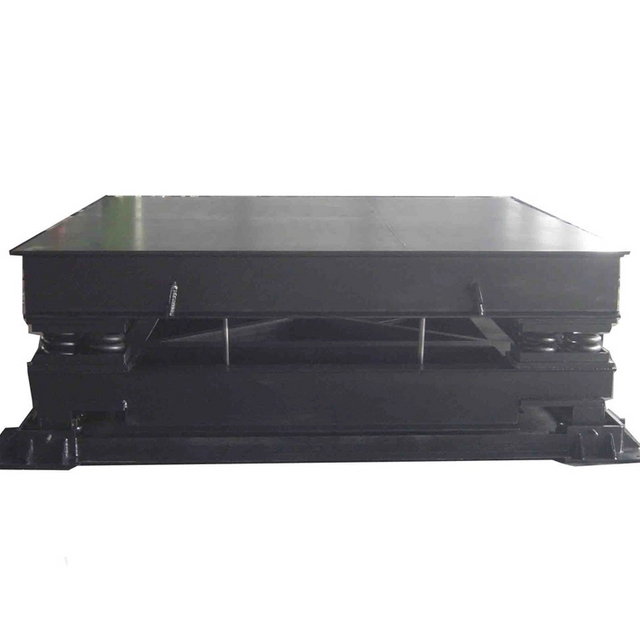
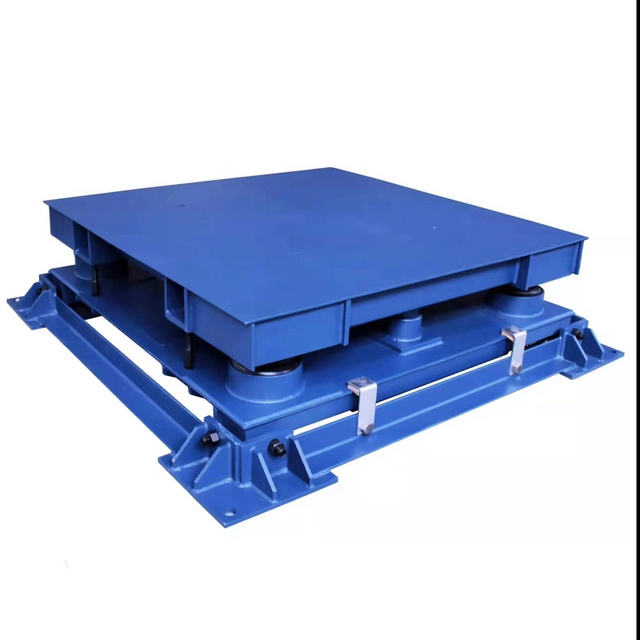
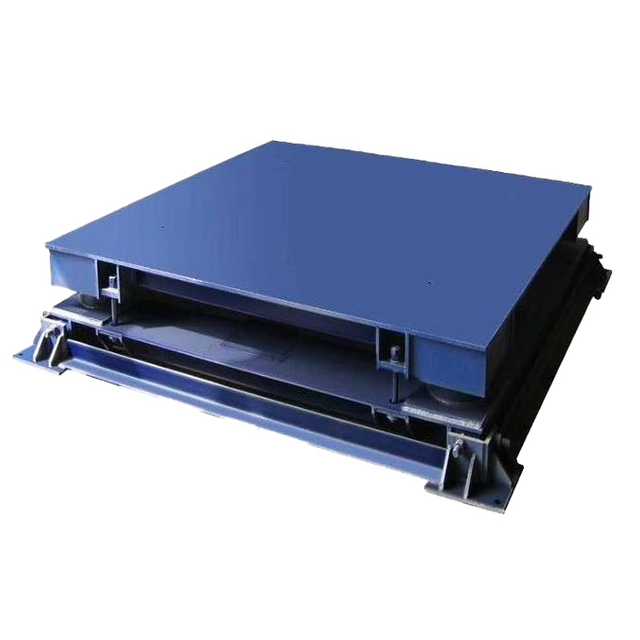
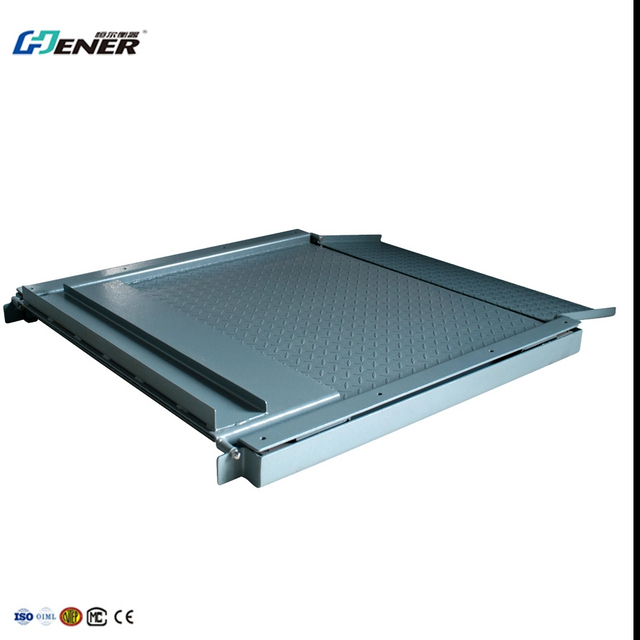
This is where engineering steps in to do what brute-force leveling cannot. A double-deck scale (sometimes called a dual-frame scale) adopts a fundamentally different architecture. Instead of fighting the uneven floor, it isolates the critical weighing function from it. As a producer of these robust tools, I can tell you this isn't a marketing gimmick; it's a philosophical shift in design that delivers tangible, rock-solid benefits where it matters most.
Let's peel back the layers and see what makes this design so resilient.
Imagine a high-end car's suspension. The cabin where you sit is isolated from the bumps and pits of the road by springs and shock absorbers. A double-deck scale works on a similar principle of decoupling.
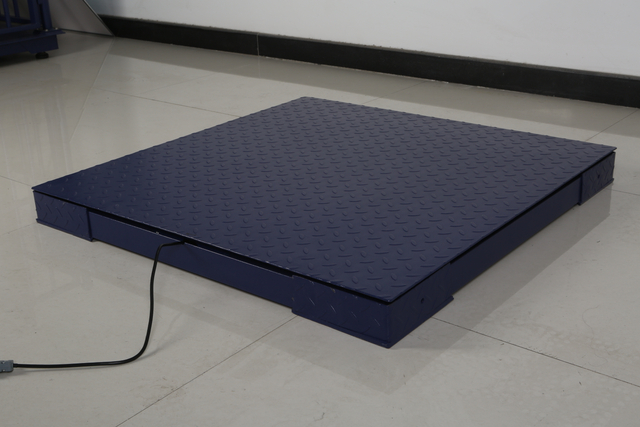
This is the pristine, flat platform you place your loads on. Its only job is to be a perfectly stable stage. It is not bolted rigidly to the bottom frame.
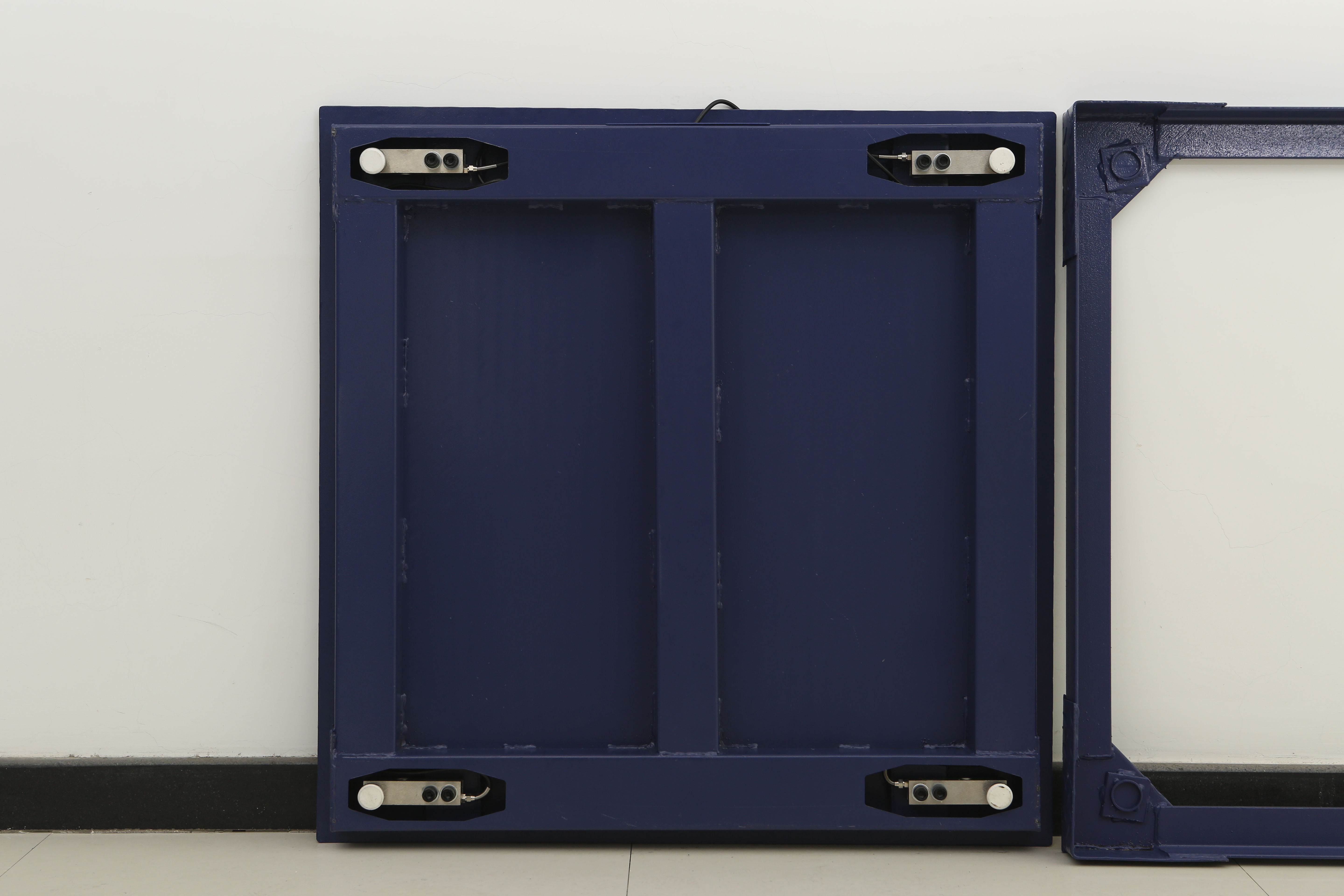
This is the heavy-duty, often box-section steel frame that sits directly on the uneven floor. You level this chassis using its robust feet. It takes on the brunt of the floor’s imperfection, becoming a stabilized, level base.
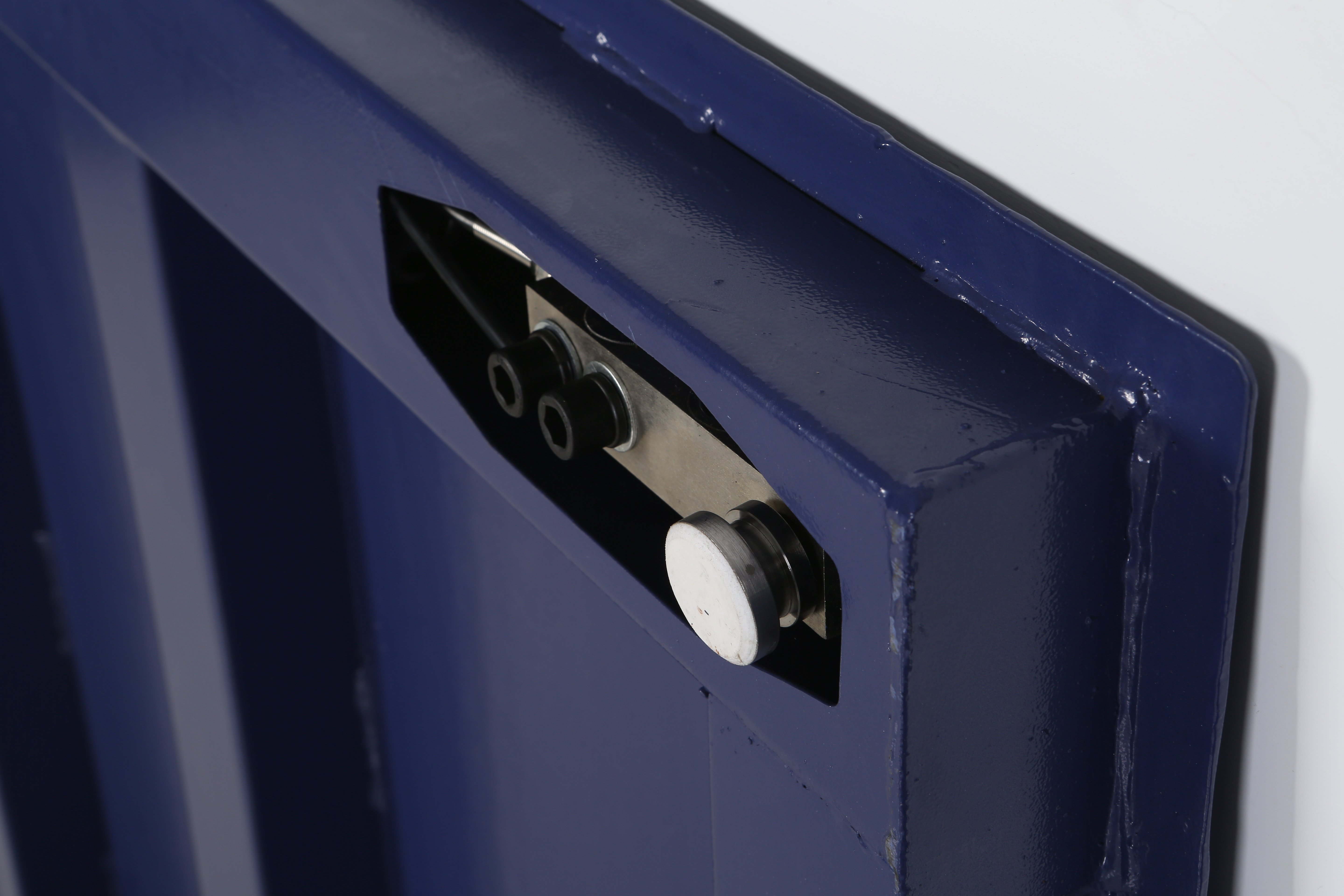
Here's the magic. The upper deck rests on the lower chassis exclusively through high-precision load cells (usually four, at the corners). These sensors are the only connection. They measure the pure vertical force from the deck above, while the rigid lower chassis below absorbs the lateral stresses and twisting forces from the floor.
When the lower chassis is torqued slightly by the floor, that stress is contained within that heavy frame. The upper deck, floating on its load cell “suspension,” remains largely unaffected. The lateral forces are not transmitted through the load cells. This means the sensors only see the clean, vertical weight force they were designed for. It's a masterclass in managing force paths.
So, what does this intelligent design mean for you on the shop floor?
You get a much wider effective “leveling range.” While you still should level the lower chassis for optimal performance, the double-deck design forgives minor settling or larger local dips far better than a single-deck scale. It's built for reality, not a laboratory.
By isolating the weighing deck, you eliminate constant metal fatigue from torsional stress. The load cells and the deck itself live a much easier life. This translates directly to fewer breakdowns, less long-term drift, and a significantly longer service life—a huge ROI consideration.
Remember the “positional snob” symptom? With the weighing surface isolated, the infamous corner load test (weighing in all four corners) becomes a formality you pass with flying colors. Weight readings are consistent across the entire platform because the structure isn't fighting itself.
If you're weighing moving objects, like pushing a pallet jack onto the scale, the double-deck structure dampens oscillations faster. The lower mass and isolated deck provide better stability, giving you a steady, reliable reading quicker.
For us as producers, and for your installers, it means a more forgiving installation process. And for you, the user, it means confidence. You know your scale's accuracy isn't hanging by a thread—or more precisely, by the stability of a single twisted frame.
Let's put this in your world.
A single-deck scale bridging a crack will flex with every load, causing error. A double-deck scale's lower chassis bridges the crack solidly, providing a stable base, while the upper deck remains isolated from the flex.
Most bays have a gentle slope for drainage. Leveling a single-deck scale here puts it in a permanent state of twist. A double-deck scale's chassis is leveled to compensate for the slope, and the upper deck operates in a perfectly horizontal plane, oblivious to the grade.
You can't pour new concrete every time a line moves. A double-deck scale is the perfect portable yet stable solution. Move it, re-level the robust lower chassis, and you're back to accurate weighing without worrying about every floor tile.
As a producer, here's what I'd advise you to look for when selecting a double-deck scale:
Standard models often range from 1 to 10 tons, with platforms from 0.8x0.8m to 1.5x1.5m. Always choose a capacity with a comfortable buffer (e.g., for 1000kg regular loads, a 3000kg scale is wise).
Mild Steel with Powder Coating: The workhorse for most indoor industrial environments. Tough and cost-effective.
Stainless Steel Load Cells & Deck: An absolute must for food processing, chemicals, or washdown areas to prevent corrosion.
Look for at least IP65 for the indicator (dust-tight and protected against water jets). For the scale itself, a well-sealed design is crucial if moisture or dust is present.
In a multi-cell double-deck scale, the junction box that sums the signals is vital. A good one, often made of stainless steel with a high IP rating and moisture-proof seals, ensures long-term signal integrity.
Not all double-deck scales are created equal. The principle is sound, but the execution is key.
The lower chassis needs to be a rock. Look for clean, full-penetration welds on heavy-gauge steel. This isn't a place for flimsy construction. The rigidity of that base is what makes the isolation principle work.
A professional producer will ship the scale pre-calibrated. This doesn't replace final site calibration, but it means the load cells and electronics are matched and tested as a system, ensuring you start from a point of proven accuracy.
Does the producer offer clear documentation, access to calibration software or procedures, and technical support? Your scale is a long-term investment; the relationship with the maker should be too.
So, let's circle back to our initial, fraught question: Do floor scales work on an uneven floor?
With a conventional scale, the answer is a hesitant “maybe, if you're lucky and the stars align.” It's a constant battle against physics.
But with a properly engineered double-deck floor scale, the answer changes. It becomes a confident “Yes, they can—and they will do so reliably, accurately, and for years to come.”
It transforms the equation. Instead of your scale's accuracy being the victim of your floor condition, it becomes protected from it. You stop worrying about every crack and slope and start trusting the data on the display. In business, where every kilogram translates to cost, inventory, and customer trust, that peace of mind isn't a luxury—it's the foundation of smart operation.
As a producer dedicated to solving real-world weighing problems, I can say this: if your floor is less than perfect (and whose isn't?), opting for a double-deck design isn't an upgrade; it's the smart, foundational choice for anyone serious about consistent, reliable weighing.